Koh Samui island offers a huge choice for those looking at buying property on Koh Samui catering for all tastes and budgets from 30,000 USD 30sqm studio condominiums to multi-million dollar luxury villas and retreats. Most properties on the island are located around the more populated northeast quadrant from Bophut on the north through to Chaweng Noi on the eastern coast, however there are also plenty of options on the more peaceful west and southern sides of the island.
Villas and houses available to buy on Koh Samui range from small bungalow and garden homes starting at around 2-3 million Thai baht. Garden view villas with private swimming pools can be purchased from around 5-6M Thai baht and sea view villas with pools generally start from around 10-12M. Beachfront villas normally have sales prices starting around 30-40M due to the high prices beachfront land demands.
The most popular villas with Koh Samui property buyers are modern sea view properties with 3+ bedrooms located in the northeast of the island priced around 12-16M.
- Buying Apartments and Condominiums
The condo and apartment market is more limited on Koh Samui than other destinations in Thailand such as Phuket, Hua Hin and Pattaya due to stricter building and height regulations which don’t allow the same high-rise structures. Be that as it may, there are many condominium and apartment options on the northeast of the island with cheaper 30sqm units starting from around 30,000 USD. As with other destinations in Thailand, direct freehold ownership condominium units available to Foreigners demand higher prices than freehold units held by Thai holding companies.
- Buying Land
There are plenty of land plots for sale on Koh Samui with land prices only increasing over the years, especially beachfront land and land in the Chaweng Noi and Plai Laem areas on the northeast.
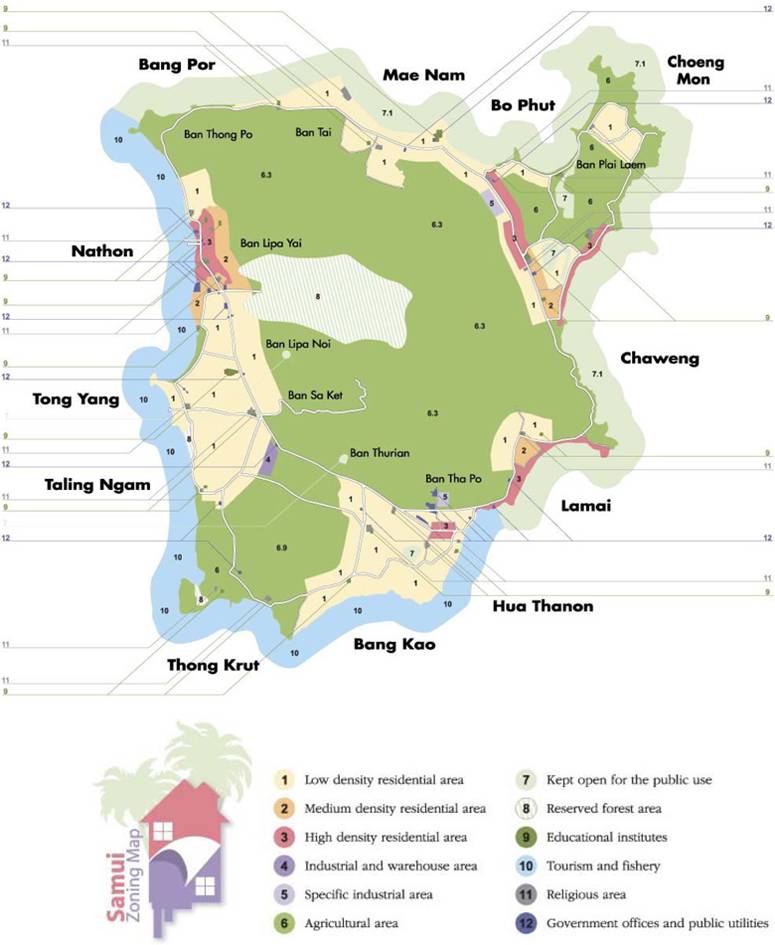
In 2006, the Thai government created zoning regulations on Koh Samui with different designations for each zone showing what can be built there. For example some zones are for agriculture only, some you can build villas but not hotels etc. Before buying land on Koh Samui, it is very important to engage with a lawyer to check the zone designation of the land and hence check what can or cannot be built there. Please see Section I for information on building and environmental regulations in zones where villas are allowed to be constructed as these regulations heavily influence the size and design of any construction project.
Koh Samui Land Zones
The Thai units of measurement for land are “rai”, “ngan” and “talang met” where 1 rai is 1,600 square meters, 1 ngan is 400 sqm and 1 talang ngan is 4 sqm.
TYPES OF LAND DEED TITLES
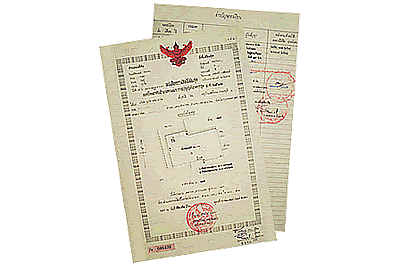
Example Chanote Land Title Document
There are many types of land deed title document types in Thailand though only Chanote (or Nor Sor 4 Jor (NS4J)) and Nor Sor 3 Gor/Kor (NS3G/NS3K) land title deed types are suitable to buy for building property, sub-dividing or selling without any future legal issues.
Chanote Land Title (Nor Sor 4)
Chanote land titles are the only land ownership documents in Thailand that offer full private ownership offering accurately surveyed GPS plotted land linked to the national survey grid and unique numbered concrete markers in the ground
Nor Sor 3 Gor / Nor Sor 3 Kor Land Titles
These deeds are accurately surveyed by aerial survey, can be updated to full Chanote titles and can be sub-divided.
Nor Sor 3 Land Title (without Gor or Kor extension)
Nor Sor 3 land (without the Gor or Kor extension) should be avoided as the land is not accurately surveyed and borders of land can only be confirmed by surrounding land plots. Border disputes and ownership disputes are common with this type of land deed.
B. Finding the Perfect Koh Samui Property to Buy
When searching for your perfect property to buy on Koh Samui, the most important decision to initially make is the substance of the property you are looking for rather than style. Substance refers to aspects of the property that cannot be changed once purchased such as location, views and other aspects such as number of floors, and floor plans (to a certain extent). Once this decision has been made, its often important to look past certain style elements such as paint colours, furnishings, fixtures and tiling which can easily be changed to your own requirements.
C. Types of Property Ownership For Foreigners in Thailand
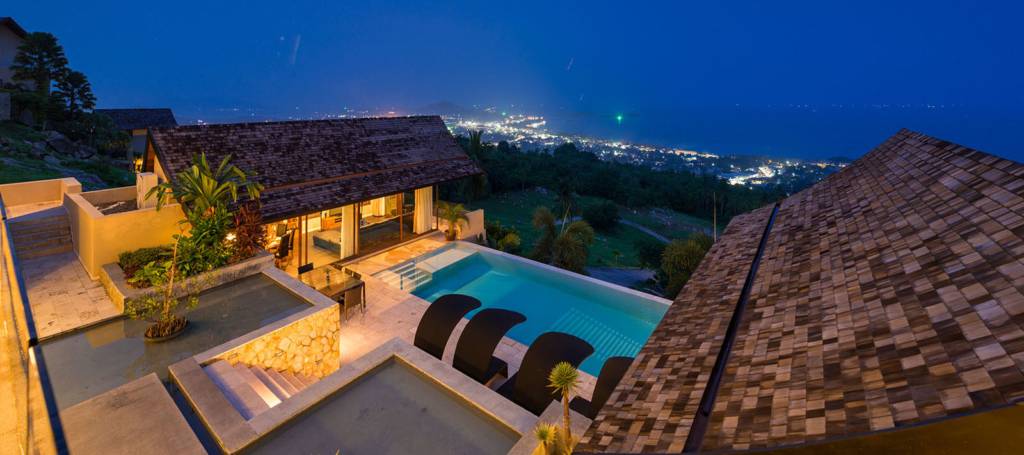
Villa Satu, Rockwater, Koh Samui
There are several distinct purchasing options open to foreigners interested in buying property on Koh Samui. Under Thai law, foreigners cannot directly own land in their own name. However, they may legally own buildings, villas and condominium units, while long-term rights over land can be acquired through recognised ownership structures which include Thai limited companies, registered leaseholds and foreign freehold condominium ownership where permitted by law. Both leaseholds and Thai limited companies have been viable and highly successful ownership structures for foreigners buying property on Koh Samui for many years.
1. Freehold Ownership with Thai Limited Company
One of the most common methods used by foreigners purchasing villas or land in Thailand is ownership through a properly established Thai limited company. The company becomes the registered owner of the land, while the foreign buyer may control the company in accordance with Thai law and the company’s legal structure.
This option can provide long-term control of a company that owns land and buildings and is widely used for residential and investment properties. However, every company must comply with current Thai legislation and should be established for legitimate purposes. Nominee shareholder arrangements are prohibited under Thai law, and buyers should always obtain independent legal and accounting advice before proceeding.
- Other Company Ownership Structures
Some apartment buildings (and a very small number of villa developments) have an indirect freehold ownership structure where a single Thai company owns the land on which the building(s) sit. Each foreign property owner is then an equal shareholder in this land holding company. Sometimes this is secured by a 30 year lease where the apartment owners vote to renew the lease every 30 years. There are several variations of this type of structure around the island.
2. Ownership Through 30 Year Lease
Leasehold remains one of the most popular and straightforward methods for foreigners purchasing villas or land in Thailand.
A registered lease may be granted for a maximum term of 30 years and must be registered with the Land Office to be fully enforceable. During the lease period, the lessee has the legal right to occupy and use the property in accordance with the terms of the lease agreement.
Many developments have historically marketed leasehold properties with renewal clauses that suggest a total term of 60 or 90 years. However, following recent legal clarification by the Thai Supreme Court, renewal clauses cannot automatically bind future landowners. Despite this clarification, registered leasehold remains one of the most widely used and secure ownership structures for foreign villa buyers in Thailand when combined with proper legal advice. While parties may agree to future renewals contractually, each renewal generally requires a new lease agreement to be entered into and registered when the time arises. Buyers should therefore view renewal clauses as contractual intentions rather than guaranteed extensions. For this reason, buyers should seek independent legal advice to fully understand the rights and protections offered under any lease agreement before committing to a purchase.
Although leasehold ownership does not provide freehold ownership of the land, it remains one of the most widely accepted methods used by foreign buyers throughout Thailand.
Additional Legal Rights Used with Leasehold
In many cases, leasehold ownership may be strengthened by registering additional legal rights over the property. These rights do not give foreigners ownership of the land itself, but they may provide greater legal security or flexibility depending on the buyer’s circumstances.
Superficies (Right of Superficies)
A Superficies grants the holder the legal right to own buildings or structures situated on another person’s land. This arrangement is commonly used when a foreign buyer leases land but wishes to own the villa constructed upon it.
When properly registered with the Land Office, a Superficies separates ownership of the building from ownership of the land. It may be granted for a fixed period or for the lifetime of the holder, subject to Thai law. Many Thai property lawyers recommend combining a registered lease with a registered Superficies when purchasing a villa on leased land, as this can strengthen the buyer’s legal position regarding ownership of the building.
In simple terms, the lease grants the right to use the land, while the Superficies establishes separate ownership of the villa built on that land.
Usufruct (Sidhi Kep Kin)
A Usufruct gives the holder the legal right to possess, occupy, use and enjoy another person’s land or property while ownership remains with the registered owner.
Depending on the agreement, a Usufruct may also allow the holder to receive income generated by the property, such as rental income. It may be registered for a period of up to 30 years or for the lifetime of the beneficiary. Although it is more commonly used for family arrangements and estate planning than commercial property purchases, it can provide additional security in certain situations.
Sap Ing Sith
Sap Ing Sith is a relatively new legal property right introduced under Thai law to provide an alternative form of long-term property interest.
Unlike a standard lease, Sap Ing Sith creates a registered real property right that may, subject to the governing legislation, be transferred, inherited or used as security. It may be registered for a period of up to 30 years.
Although Sap Ing Sith offers interesting legal possibilities, it has seen relatively limited adoption in the residential property market. Not every property or development is suitable for this ownership structure, and buyers should seek specialist legal advice before considering this option.
The Quality of a Lease Matters
Not all leasehold agreements are structured in the same way. While two properties may both advertise a 30-year registered lease, the overall quality of the lease can vary depending on who grants the lease, how the development is organised, and who is responsible for future renewals.
Lease Directly from the Landowner
Many villas on Koh Samui are leased directly from the registered owner of the land. This is a straightforward structure and is widely used throughout Thailand. Renewal provisions may be included in the lease agreement, but any future renewal will generally depend on the cooperation of the landowner or their successors at the time a new lease is registered.
Sub-Lease from a Developer or Estate Management Company
Some developments operate under a master lease. In this arrangement, the landowner grants a long-term lease to the developer or estate management company, which then grants individual sub-leases to villa owners. Buyers should understand the remaining term of the master lease, as the sub-lease cannot extend beyond it. The financial stability and long-term operation of the company should also be considered.
Lease from a Developer or Management Company with Ongoing Estate Administration
Larger developments may lease properties through a developer or dedicated management company that continues to operate the estate after construction is complete. These companies often oversee common areas, maintenance, estate services and lease administration. Where the company has a proven track record and clear procedures for future renewals, this structure may provide greater continuity than a lease relying solely on an individual landowner. Buyers should nevertheless carry out appropriate due diligence on the company and its legal rights over the land.
Regardless of the structure, buyers should always verify who the legal lessor is, confirm that the lease can be properly registered at the Land Office, and obtain independent legal advice before signing any agreement.
3. Buying A Condominium Freehold
Horizon Condominium, Koh Samui, Thailand
Foreign nationals may legally own condominium units in Thailand in their own name on a 100% freehold basis, provided the condominium development complies with the Condominium Act.
Under Thai law, foreign ownership within a condominium project is limited to 49% of the total saleable floor area (foreign quota). The remaining 51% must be owned by Thai nationals or qualifying Thai entities (Thai quota). This is commonly referred to as the foreign ownership quota.
To qualify for foreign freehold ownership, the purchase funds must normally be transferred into Thailand from overseas in foreign currency and correctly recorded by the receiving Thai bank in accordance with current regulations.
The buyer receives a condominium title deed registered in their own name, providing genuine freehold ownership of the unit. The owner is also typically issued with a house registration document (Tabien Baan), although this document records residency information and should not be confused with proof of ownership. Ownership is evidenced by the registered condominium title deed held at the Land Office.
No matter which ownership structure is used, the relevant legal rights should be properly registered with the local Land Office where applicable.
4. Alternative Ownership Stuctures
For buyers seeking greater long-term security, alternative lease structures have evolved beyond a standard 30-year registered lease.
Convert to Leasehold
Some law firms are offering conversion from freehold to leasehold with 30 year leases with renewal pedges, secured in various ways such as superficies and usufruct agreements.
Better Than Freehold™
The Better Than Freehold™ Structure combines a registered lease with additional legal instruments such as a registered mortgage and a share pledge, held through a regulated offshore trust. This helps to provide continuity if the beneficial owner changes or to simplify succession planning for heirs. This is designed to strengthen the practical security of a lease.
Although no legal structure can grant a foreigner freehold ownership of land in Thailand, these enhanced arrangements aim to address two of the main concerns associated with traditional leasehold ownership: long-term continuity and enforceability.
Register with Better than Freehold to receive more information by clicking this link or scanning the QR code below.
Choosing the Right Ownership Structure
The most appropriate ownership structure depends on the type of property being purchased, the buyer’s investment goals and personal circumstances.
Because every property purchase is unique and Thai property law can change over time, buyers should always engage an experienced independent lawyer to review contracts, explain the available ownership options and recommend the structure most appropriate for their individual circumstances.
Ownership Method
Can Own Land?
Can Own Villa/Building?
Typical Term
Ideal For
Thai Limited Company
✔ Via Company
✔ Yes
Permanent
Foreign buyers seeking long-term control of villas or land through a properly established Thai company.
Leasehold
✘ No
Usually
Up to 30 Years
Holiday homes, investment properties and long-term villa occupation.
Leasehold + Superficies
✘ No
✔ Yes
30 Years or Lifetime*
One of the most common structures for foreign buyers purchasing villas on leased land.
Leasehold + Usufruct
✘ No
Right to Use
30 Years or Lifetime*
Retirement, long-term occupation and certain family ownership arrangements.
Sap Ing Sith
✘ No
Registered Property Right
Up to 30 Years
Certain developments where this ownership structure is available.
Foreign Freehold Condominium
N/A
✔ Yes
Permanent
Foreign buyers purchasing condominium units within the foreign ownership quota.
* Subject to the registered agreement, applicable Thai law and independent legal advice.
D. Reasons For Buying Property on Koh Samui
Why you are buying a property in Koh Samui is an important aspect which often dictates the types of property options you look at. There are often 3 main reasons for purchasing property on the island; for pure investment, a holiday home or permanent residence.
- Buying for Pure Investment
When looking to buy a property as a pure investment, the most important objective is to look at property options from the perspective of future renters from the island’s lucrative holiday rental market. The most rentable properties are without a doubt on the northeast of the island with sea views, contemporary architecture and modern interiors.
Off-plan properties offer better value for money than completed properties and any possible risks associated with off-plan builds can be minimized by using an established local developer.
- Buying a Permanent Residence
Buyer’s looking for a permanent residency generally look for a comfortable property often set over just 1 floor with a garden and privacy from neighbours in areas with nearby conveniences and easy access without mountainous roads.
- Buying a Holiday Home
Those seeking a holiday home on the island look at properties which offer the comfort and privacy of a permanent residency near a beach or with sea views on the more rentable northeast of Koh Samui.
E. Return on Investment with Holiday Rentals
With the right property and villa management company, Koh Samui can offer a good ROI for investors and a good income for holiday home owners. Estate Samui Properties offer high quality villa management services, with our portfolio of Simple Luxury Villas holiday rental properties. Contact us for a free consultation.
F. The Process of Buying Property on Koh Samui
When you buy a property on Koh Samui, the purchase process generally takes 6-8 weeks to complete. To begin the process, an initial Purchase Reservation Agreement, containing the basic terms of the sale, is signed by both parties and a deposit payment made to and held by the real estate agent – usually 5% of the agreed sales price. This initial agreement will then give approximately 45 days for the Buyer’s lawyer to perform the Due Diligence process and produce the final Sales & Purchase Agreement to complete the property sale. If, for any viable reason the purchase fails Due Diligence and the Seller is unable to rectify any issue(s) then the property sale does not complete and the deposit is returned to the Buyer. Please note that some unscrupulous agents may ask for a larger deposit and keep some of that deposit if Due Diligence fails so its important to read through agency contracts very carefully
When buying an off-plan property, there are normally around 6 to 8 staged payments based on the stages of construction of the property. Transfer of ownership is usually completed after the final stage payment has been made.
G. Property Taxes in Thailand
Property transfers in Thailand may be subject to a number of government fees and taxes. The amount payable depends on the ownership structure, how long the property has been owned, the seller’s status and the method of transfer.
- Government Fees and Taxes
Government fees and taxes may include:
–Transfer Fee (generally 2%) –Withholding Tax (varies depending on the seller) –Specific Business Tax (where applicable) –Stamp Duty (where applicable)
Buying a Property by Company Takeover
When a property acquisition goes ahead by a company takeover (Thai or offshore), no transfer of ownership is registered at the Land Office. As ownership of the property remains with the same company, the transaction may not attract the normal property transfer taxes and Land Office transfer fees associated with a real estate transfer. However, buyers should obtain independent legal and tax advice, as other taxes or legal considerations may still apply depending on the transaction.
For offshore holding companies, Thai property transfer taxes may not apply where there is no transfer of ownership at the Thai Land Office. However, tax obligations may arise in the jurisdiction where the company is incorporated, and professional advice should always be obtained.
Buying a Property without Company Takeover
When buying a property by transferring freehold ownership to another holding company, a transfer of ownership takes place at the Land Office, meaning government fees and taxes generally become applicable. Depending on the ownership structure and the seller’s circumstances, the combined government fees and taxes can be up to approximately 6.3% of the property’s registered or assessed value, although they may be considerably lower in many transactions.
Leasehold Transactions
Leasehold transactions are generally subject to different government fees and taxes than freehold property transfers. A registered lease is recorded at the Land Office and may be subject to registration fees and other applicable taxes depending on the lease terms, rental value and the parties involved.
In many cases, the total government fees associated with a leasehold transaction are lower than those payable on a freehold transfer. However, the exact costs vary depending on the structure of the transaction and current Thai regulations. Buyers should always obtain independent legal and tax advice before proceeding.
Foreign Freehold Condominium Purchases
Foreign freehold condominium purchases are generally subject to the standard government transfer fees and taxes applicable to condominium transfers. As with other property transactions, the exact costs depend on factors such as the ownership structure, the seller’s status and the allocation of fees agreed between the buyer and seller.
Who Pays These Fees?
Unlike some countries, Thailand does not prescribe who must pay each government fee or tax. The allocation of these costs is negotiable and is normally agreed between the buyer and seller as part of the sale contract. In practice, many developers specify how government fees and taxes are shared in the sale agreement, while private resale transactions are often negotiated between the buyer and seller.
H. Legal Advice and Recommended Koh Samui Law Firms
We can give you information and advice on your options to allow you to decide how to buy property in Koh Samui but laws and regulations do change so it is essential to engage with a professional law firm before moving forward with any purchase and to complete the Due Diligence process on the property. We can recommend professional, independent and established lawyers on Koh Samui who can give you full, completely up-to-date information and will ensure that every aspect of the purchasing process goes smoothly when buying property in Koh Samui.
I. Building and Environmental Regulations on Koh Samui
For those interested in building their own holiday villa on Koh Samui or investors looking at developing properties, it is very important to consider the environmental and building regulations on Koh Samui at the initial design stage. Building regulations on Koh Samui govern the height and area of buildings allowed in relation to distance from the beach with further environmental regulations governing design factors based on both height above sea level and the sloping of the land upon which the building sits.
Building and environmental regulations on Koh Samui are there to protect the beauty and longevity of the island from over-zealous development.
Before starting construction, a building permit must be applied for at the local land office. The permit will be issued if building and environmental regulations are adhered to. Additional building regulations are brought into effect from time to time and so it is important to check for new regulations or talk with your architect/design team before applying for your building permit.
- Building Regulations
The basic Koh Samui building regulations, shown below, are based on distance from the beach. The exact position where is beach begins, of course, is open to interpretation and it is local authorities that make this decision.
Within 10 Meters from the Beach
No buildings are allowed.
Between 10 and 50 Meters from the Beach
Only buildings with 1 floor are allowed with a maximum height (including the roof) of 6 meters. Each stucture must have a maximum floor area of 75 square meters. The roof structure should be peaked and not flat.
Between 50 and 200 Meters from the Beach
Structures must be no more than 2,000 square meters with the maximum height, including the roof structure, not exceeding 12 meters. The roof structure should be peaked and not flat.
More than 200 Meters from the Beach
Each building must have a maximum height of 12 meters including the roof structure. The roof structure should be peaked and not flat.
Beach villas on Koh Samui abide by building regulations by building several small pavilions each with a floor space of less than 75 square meters.
- Environmental Regulations
Environmental regulations on Koh Samui are based on both height above sea level and also on the sloping of the land upon which the structure will sit. These regulations control what is allowed in terms of minimum area of land, maximum floor area, water drainage system, architectural design and roof design among other factors.
Height Above Sea Level
Less than 80 Meters Above Sea Level
No additional regulations. However property developments with more than 10 units require to have suitable water and waste treatment systems. An additional regulation, subject to hotels only, is that 50% of the land must be green (unbuilt on).
Between 80 and 140 Meters Above Sea Level
The building must be a single home of maximum height (including roof) 6 meters with land area a minimum of 400 square meters and suitable water drainage system. 50% of the land must be green (unbuilt on), the roof should cover at least 80% of the built area and match surroundings with the architectural design based on traditional Thai, tropical or local aesthetics.
More than 140 Meters Above Sea Level
Same regulations as for height between 80 and 140 sqm (above) with structures being no more than 90 square meters in area.
Sloping of Land
Less than 35 Degree Slope
No additional regulations.
Between 35 and 50 Degree Slope
The building must be a single home with land area a minimum of 480 square meters. Structures can be no larger than 80 square meters, 75% of the land must be green (unbuilt on) and 50% of this green land must have be planted with trees native to Koh Samui.
More than 50 Degree Slope
No building is permitted.
Contact Us at Estate Samui Properties to find about more about Koh Samui real estate
Legal Disclaimer
The information provided in this guide is intended for general informational purposes only and should not be considered legal, tax or financial advice. While every effort has been made to ensure the information is accurate at the time of publication, Thai property laws and regulations may change over time. The most appropriate ownership structure depends on each buyer’s individual circumstances. We strongly recommend that all purchasers obtain independent legal advice before entering into any property transaction in Thailand.